

Darkness is (the) source within which all possibilities exist and from which all potentialities are drawn. It is a complex milieu of misunderstanding, creation, and mystery. The totality of 3D reality is contained within and permeated by an energetic-flux-laden darkness. Periods of darkness, in the form of sleep, are of great benefit to the body and the mind. A recurring narrative of creation as emanating from darkness exists historically, across cultures. Religio-social constructs are framed such that unfavorable imaginings and opinions about darkness are firmly held.
Darkness is (the) source within which all possibilities exist and from which all potentialities are drawn. It is a complex milieu of misunderstanding, creation, and mystery. The totality of 3D reality is contained within and permeated by an energetic-flux-laden darkness. Periods of darkness, in the form of sleep, are of great benefit to the body and the mind. A recurring narrative of creation as emanating from darkness exists historically, across cultures. Religio-social constructs are framed such that unfavorable imaginings and opinions about darkness are firmly held.
The void of darkness, undeterminable, unfathomable, unknowable, unsearchable, is a container that is vast, immeasurable, unbounded. Current science is analyzing darkness as fullness, not emptiness. This is reflective of belief systems that describe an existent potency in darkness. Mythologies have long held that all of creation emanated from the darkness, chaos, void. On a human level, people will sometimes (maybe more than not) close their eyes when they are in deep thought. This often is an attempt to minimize “visual noise” and release mental capacity for internal processing. Drawing down from darkness into tangibility.
That darkness can be considered good is an unresolved point of view. The opinions of darkness that do abound are in conflict. Historical creative myths posit that darkness is the womb from which all of creation is drawn. There is no right of wrong attached to creation, per se. That growth occurs, in nature and in humans, in the totality of darkness is documented as fact. The adage of as above, so below can be viewed as applicable to human concerns and to the cosmos. Yet, there is a professed, disinclination (on religious grounds) towards ascribing anything of merit to darkness. There are those who describe themselves as ‘lightworkers’ and staunchly disavow associations with darkness. Religions, mainly monotheistic, attach many negative attributes to darkness. Yet, in the KJV (Bible), it states that ‘the night and the day were the first day’ (Paraphr – Gen 1:5). In that same bible, there is also reference made to ‘the treasures of darkness’ (Isa 45:3).
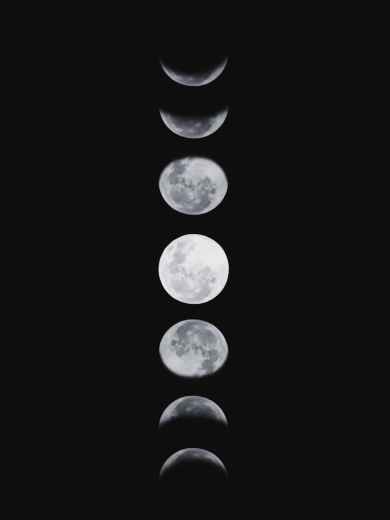
The whole of known creation is suspended within the matrix of darkness. Various forms are perceived when looking at visible creation. The perception allows for categorizations that are based on what is seen. The very fact that visible light is only a small sliver of a vast electro-magnetic spectrum might indicate that material substance, as perceived, may only be a partial picture of a totality. Studies reveal that all material is comprised of space (darkness). An atom is 99.999% empty space. Yet, this emptiness, that is visually and tactilely undetectable) contains subtle (energy) fields and electromagnetic potentials. All of this energy and all that is ‘visually’ perceived exists within darkness.
Physiological recovery and instances of major discovery occur through sleep-facilitated darkness. When considering sleep, one must know that the body engages in various processes of repair and rejuvenation during that time. This includes tissue repair (largest release of growth hormone during sleep), hormone regulation (regulation and rebalancing of hormones during sleep), waste clearance (flushing of neurotoxic proteins), memory consolidation (daily events are placed into long term storage), and immune support. There are also instances of people discovering things in their sleep. Keith Richards, of Rolling Stones fame, wrote a riff for one of their famous songs in his sleep. Also, August Kekule stated that the structure of the benzene ring was revealed to him in a dream.

Throughout civilizational narratives, darkness has been presented as the source that gives rise to (all) creation and heralded as the matrix within which all is suspended. Darkness presents a mysteriousness to the observer. One might wonder about what lay in the indeterminable depths that extend beyond ocular perception. The mysterious nature that is attributed to darkness became synonymous with the feminine aspect of procreation. Even in present day, a woman carrying the child to term still retains a degree of opaqueness and reverence. Various mythologies and religions present darkness (oft-times in association with water) as the medium that contains and sustains (all of) creation.
The attributes of darkness are swept aside as inconsequential or as something (that is) eschewable. Much of this is based in dogma based socialization. Religion, as a major component of socialized thought, can cloud the ways in which darkness is regarded. Darkness is associated with negativity, suffering, and moral corruption. Individually, (many) people have experiences from the past that they choose to not explore. Delving into personal past experience can be cathartic as these experiences require exploration of personal darkness and shadow. Many do not want to take the journey. Although challenging, exploring what darkness entails, particularly on a personal level, can provide, for one, important information and beneficial insight.

What is darkness? Can it be defined as empty nothingness? Is it a flux laden no-thing-ness? It has been regarded as a immutable force or presiding presence against which (human) spiritual endeavor must struggle. Yet, some traditions (mythological, spiritual) unequivocally define darkness as (the) creatrix (sometimes, in harmony with ‘a’ creator). Darkness, as sleep, is mandatory in that all living things require a rest phase for rejuvenation, repair and overall resetting. Light is a veil that belies the completeness of darkness within which all of known reality is found. Instead of accepting it ‘as is, the variety of opinions on darkness allow for perceptions of ‘either / or’ to persist. Ultimately, darkness is source, it is solace, it is silence, it is serenity.
.

