

Ankle injuries, as commonalities in sport (specifically) and in life (generally), can be mitigated. The importance of the ankle is seldom regarded in the preinjury state. Rehabilitation modalities are brought to bear after an injury occurs. Most therapies (seemingly) are focused on the foot being (more or less) stable which may not facilitate maximal stimulation of the foot proprioceptors. If the surface were to radially-perturbed while in a single leg stance, the inherent structures of the foot would be stimulated to the send signals to the body in real time. This would facilitate the appropriate, real time adjustments .
Ankle injuries, as commonalities in sport (specifically) and in life (generally), can be mitigated. The importance of the ankle is seldom regarded in the preinjury state. Rehabilitation modalities are brought to bear after an injury occurs. Most therapies (seemingly) are focused on the foot being (more or less) stable while various body parts are manipulated in space. This may not facilitate maximal stimulation of the foot (ankle) proprioceptors. Ankle proprioception could be enhanced if the surface was (made) unstable and the body was forced to adjust the COG.

Compromised ankles stand as the most common injury among active individuals. Approximately 3 injuries occur for every 400 people. Basketball players (highest) and Football (U.S.A. and International) account for the predominance of ankle injuries. The number of ankle has been consistent. Although numerous studies have been conducted as to what comprises the underlying causes, injuries continue to occur. What is apparent is that proper training of ankle proprioception is nearly non-existent. A thorough method of identifying individuals that are prone to ankle injury or have chronic ankle instability (CAI) would be beneficial for the populous at large. Risk factors of ankle sprain or CAI, including age and sports discipline, could be reported to identify the implicated population. Factors which remain unclear of ankle sprain/CAI (e.g. gender, body size, age and history of rehabilitation) should be clarified and described in further epidemiological studies.
There are two ways that the ankle can be injured. One way is rolling to the foot outer edge (inversion). This is the more common injury at 90% occurrence. Typically, sprains can be healed with conservative treatments like rest, ice, elevation, over-the-counter medications, and simple rehabilitation exercises. Symptoms that do not respond, over time, to non-operative treatment, may require surgery to repair or reconstruct injured ligaments. The other type of injury is an eversion ankle sprain (the foot is turned outward) This type (of injury) is less common and is often accompanied by a fracture of the fibula bone. It should be medically tended to as soon as possible, so as to determine if the severity warrants intensive treatment.
Ankle injuries can adversely affect mobility. This is immediately apparent once the injury occurs. It is interesting that most people do not give notice to their feet. The feet are an important body part; yet, they receive little attention when they are healthy. They suffer daily wear and tear from transporting individuals ‘to and fro’ and being cooped up in socks and shoes all day. The effect of overt ankle injury brings attention to, and elicits accompanying treatment for, that area. To have functional mobility is the goal of ankle rehabilitation.
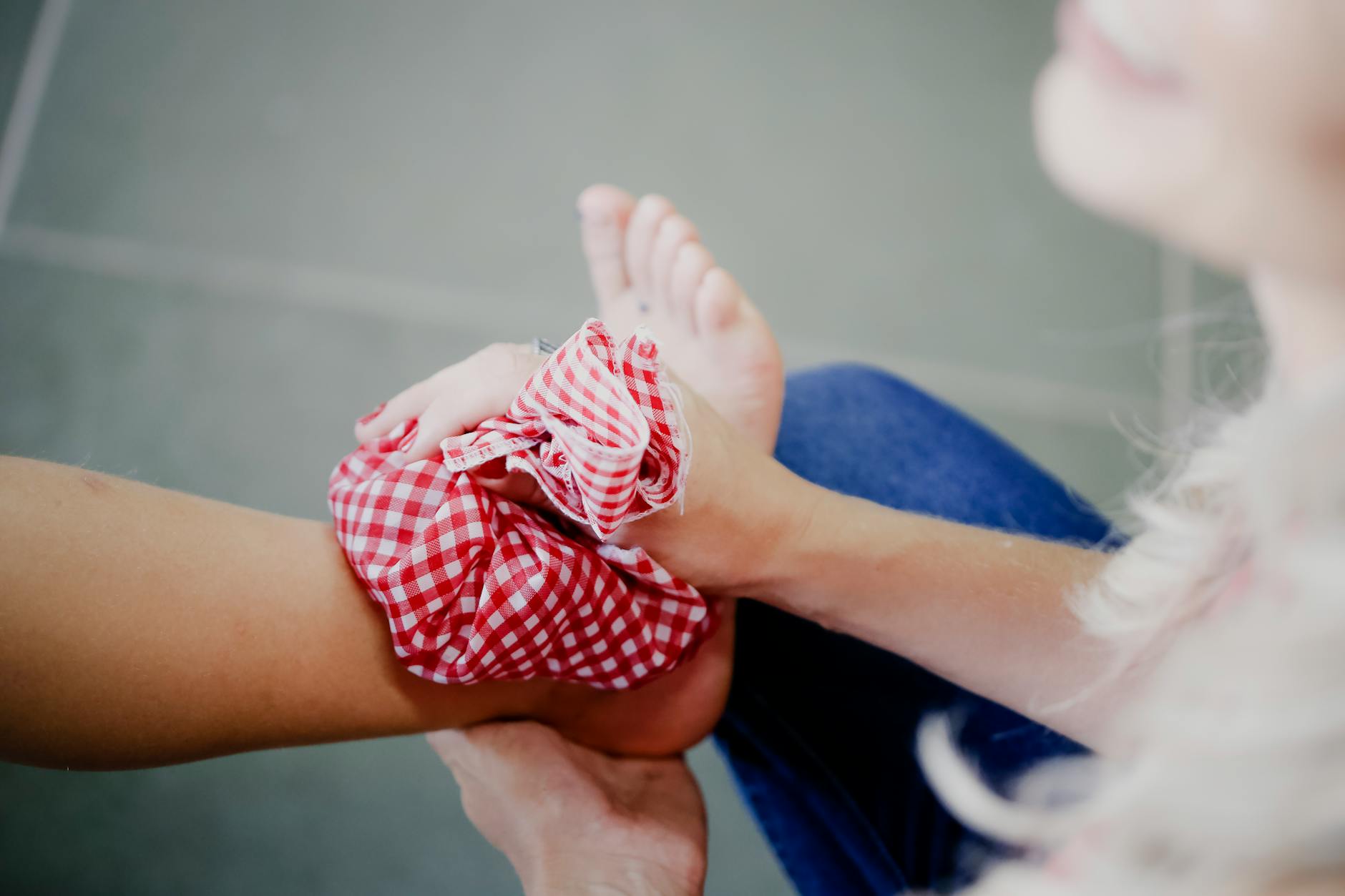
RICE is typically the standard treatment. Rest as in stop, change, or take a break from activities that result in pain or soreness. Apply an ‘Ice’ or cold pack right away to reduce pain and swelling. Place a towel over the cold pack before applying it to the skin. Compress the injured or sore area (not too tightly) by wrapping with an elastic bandage (such as an Ace wrap) to help decrease swelling. Elevate the injured or sore area on pillows while applying ice and try to keep the area at or above the level of your heart to help minimize swelling. This series must be utilized as an initial step. Be aware that persistent symptoms may indicate a more severe strain (or break) and may require medical attention.

The use of a wobbleboard could mitigate injury of a healthy ankle or re-injury of one. The benefits of using a wobbleboard include improvements in ankle mobility, core strength, balance, coordination, muscle memory, and agility. A study by Freeman et al3 proposed that ankle injury may disrupt joint afferents located in the supporting ligaments. After injury to the nervous and musculotendinous tissue, proprioceptive deficits are likely to occur and may manifest as reduced joint position sense. A single leg stance, wobbleboard routine could enhance the proprioception of the foot and to make real time, postural adjustments in response to these detected abnormalities of bodily motion. This is an accessible avenue to the mitigation of the effects resulting from or the utilization of pre-emptive prevention strategies for ankle injury.
Using a wobbleboard can specifically target the vestibular system and the musculo-tendono-ligamentous structures in an efficacious manner to enhance ankle stability and mobility. As a therapy, it would be more effective to implement strategies to develop the capacity of the ankle to more accurately respond to a variety of challenging situations. The ankle must be able to instantly respond to situations that can challenge either stability or mobility. Being concerned with ankle functionality is an oversight of most activities or programs. Yet, addressing the functionality of the ankle is relatively easy, if done before injury occurs.
The following paragraphs are excepted from the article:
The Role of Ankle Proprioception for Balance Control in relation to Sports Performance and Injury
6.2. Active Intervention
Various active exercise interventions, delivered in a task-specific paradigm, have been found to be effective for the improvement of ankle proprioception. It has been proposed that this occurs through neural mechanisms such as neural learning and neural plasticity [5]. Neural learning effects associated with ankle proprioception may be rapid. For example, Witchalls and colleagues [43] found athletes with chronic ankle instability improved their ankle proprioception in one session through ankle AMEDA test-retest practice. This improvement was thought to be due to central processing modifications. The authors [43] argue that mechanoreceptors at the ankle joint do not change during the repeated proprioceptive testing (the time is too short), and proprioceptive information originating from peripheral structures at the ankle does not significantly change either. Therefore, faster neural learning processes are likely to play the key role in improving ankle proprioception. Further research is needed to explore to what extent the improvement in ankle proprioception through neural learning translates to better balance control in the sporting context and whether such learning should be conducted as explicit or implicit learning [84].
In contrast, some neural changes may require weeks, months, or even years of practice. Several weeks of wobble-board training [17, 85, 86], Tai Chi exercise [56, 87, 88], and other specifically designed exercise programs [89–91] have been shown to improve ankle proprioception and balance control in athletes, university students, and older people, with or without ankle instability. Kiers et al. [92] argue that exercise on an unstable surface might not target ankle proprioception per se but rather trains the CNS to shift the weighting of sources of proprioceptive signals to improve balance. If this is the case, yachting and figure-skating athletes whose daily activities involve performing motor tasks on an unstable surface would benefit from exercise on a similar surface [93]. What is not known is whether combined exercise on both unstable and stable surfaces provides even greater benefits for ankle proprioception and balance control than just active training on unstable surfaces.
 Ab-Sutra Wellness and Fitness