
The axiom ‘Movement is Life’ is often repeated regarding health and well-being. Exercise is an integral to slowing the natural process of aging and age related maladies. Yet, many opt for an easier way . . . . that of avoiding exercise. The book written by NASA Scientist Joan Vernikos, Sitting Kills, Moving Heals, extolls the benefits of consistent basic movement, in addition to exercise, for the (human) body. One should say to themselves daily ‘Move More, Live Better’.

It is viscerally preached from the essence of those wellness purveyors that we should be ascribing to regular movement acquisition: i. e. . . . get up off of your ass. Many drift along in their adult years as the capacity to move, functionally, slowly deteriorates. to drift. A point is reached where some will take aim to forestall this deleterious progression. For others, a point diminishing returns could possibly be reached where exercise will be of minimal effect.
Research shows that working professionals who exercise during the day feel healthier and experience positive associations with job performance, including improvement in time management skills and mental performance. Employees are more likely to demonstrate better moods, increased motivation, greater stamina to complete work, less stress, and better interactions with coworkers.
The average person in modern society wants to ‘relax’. Get up. Go to work. Deal with work. Come home and relax. For many, relaxing entails, well, doing nothing. O. K., not nothing, per se. Have a beer. Eat some food. Watch television. . . . . All of this on the wash, rinse, repeat cycle. If the job is somewhat physical this is not ‘so bad’. The majority of jobs, today, require one to be seating, for extended periods of time, all day in some cases. This, coupled with the dynamic of relaxing after work, does not bode well for the human body.
Dr. Joan Vernikos elucidates the need for the human body to move. She points out that exercising is, at best, an addendum to the need for regular, day-to-day activity. The ancestors of old did chores without the convenience of motorized, mechanical assistance. There was plenty of walking, lifting, carrying, plowing and sometimes running, to be had by all. Those times required one to be more athletic, so to speak, in order to survive. The impetus for that level of activity has passed for modern society. Yet, the need for regular activity has not gone away.
Ten Tips To Stay Healthy at Work or While Working from Home:
1 Ensure that your office and home workspaces are ergonomically set up to prevent injuries.
2 Sit for 30 minutes then take a break. A brief 5–10-minute break can help rejuvenate your mind and prevent chronic pain.
3 Use the stairs whenever possible. Walk regularly throughout the day.
4 Alternate periods of sitting and standing throughout the day.
5 Have meetings while walking as alternatives to sitting in conference rooms.
6 Prioritize exercise time to daily —schedule it as you would plan other important work responsibilities.
7 Break up physical activity into smaller time increments —such as 10 minutes before work, 10 minutes at lunch, and 10 minutes after work—if longer durations of exercise do not fit within your schedule.
8 Incorporate microbreaks: 1–2 minute breaks every 30–60 minutes of sitting. Stand up and stretch your entire body.
9 A hands-free headset for your phone will allow you can move around more freely.
10 Eat nutritious meals and keep healthy snacks on hand.
9 Ways Excessive and Improper Sitting Can Harm You
Head
Long periods of sitting can cause blood clots, which can travel to the brain causing a stroke.
Neck
Sleep apnea can be attributed to fluid, retained in the legs during the day, that moves to the neck. Neck muscles become stressed, leading to pain.
Lungs
Sitting for most of the day can double the possibility of developing of a pulmonary embolism or blood clot.
Heart
There is twice the chance of developing diabetes and (or) heart disease than those when one lives a sedentary lifestyle vbersus being more active.
Arms
Lack of physical activity leads to hypertension or high blood pressure.
Back
Long periods of sitting places a high amount of pressure on the spine. Over time, sitting can result in compression of the spinal disks. Because muscles are tight from pressure, sudden movements can lead to injury
Stomach
Excessive sitting gives rise to obesity and colon cancer. Enzymes in the blood vessels of muscles responsible for burning fat shut down, leading to the disruption of the body’s method of metabolizing fuels.
Legs
Fluid collects in the legs while we are sitting. Standing up and walking assists with pumping it through our body
Feet
Numbness in the feet can be caused by poor circulation. It can also cause nerve damage or pressure on nerves when you sit for long periods.
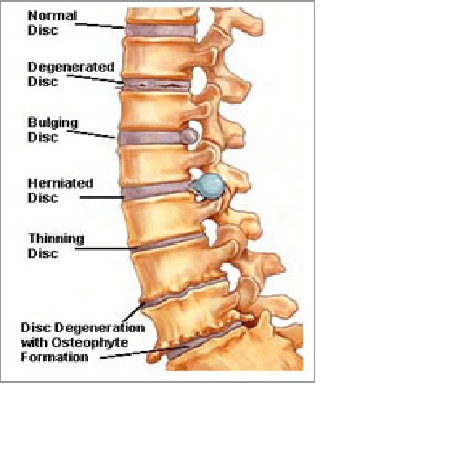
How Excessive and Improper Sitting All Day Affects the Body
Trapezius muscle incurs straining
Tension and tightness develop in the neck
Discs begin to bulge in lower back
Knee pain proliferates
Sciatica proliferates
Foot arch flattens
The following exercises are taken from the pamphlet written by NASA: DeskFit – 20 ESSENTIAL DESK EXERCISES YOU CAN DO WITHOUT LEAVING YOUR OFFICE OR HOME WORKSPACE
Ensure that you obtain Medical Clearance before undertaking any fitness regimen
CHAIR SIT AND STAND
Stand in front of the chair with your legs shoulder-width apart. Squat down like you are sitting on the chair but without, actually, making contact. Maintain a proper position: back straight, knees above the feet, weight on the heels. Straighten your legs to go back to the starting position. Repeat the movement 10–15 times.
SEATED TORSO TWISTS
Sit on the edge of the chair, bend your legs at the knees, and lean slightly back without rounding your spine. Bend your arms so your elbows are level with the top of your ribcage. Pull your navel in and twist slowly to the left. Inhale and twist to the right. Repeat the exercise dynamically 20 times total.
SEATED LEAN STRETCH
Sit up tall and raise your arm. Bend toward your left side reaching with your right hand overhead and hold for 10–15 seconds. Repeat to other side for two sets.
Movement is an option. It must be engaged in as an important part of day to day activities. Many choose to not make movement a habit. This choice can eventually develop into possible, long term physical challenges. This need not be the case.
 Ab-Sutra Wellness and Fitness