

There are many definitions that can be ascribed to the ‘spiritual journey’. At the core, each definition encompasses attaining oneness with (the) source through personal experience. The journey of abolishing all barriers that exist between seeker and the origin of source is . . . . one of personal endeavor. One can choose either the exoteric path or the esoteric path in their traversing of the spiritual dimensions. The individual seeker must honestly search for and establish their own union with the divine origin of source.
The search for inner understanding is not (necessarily) straightforward. People are usually indoctrinated into a spiritual path (i. e. by parents, family, associations, etc). They have several options (that become) available to them throughout (their) life. One option is to allow concepts of realization / salvation (per se) to be dictated to them. The other option is for one to search the various tomes and literary sources to arrive at a self determined course that they may eventually choose.

The myriad paths for self discovery are not totally, but are often presented as, dissimilar. One is ultimately searching to be liberationally exonerated from the pitfalls of earthly existence. These pitfalls include attachment, greed, selfishness, cruelty, ego (self – centeredness) and the like. Basically, tendencies and habits that place a barrier between the individual and the goal of liberation or freedom. How one chooses to approach the attainment of unification with higher source is a personal endeavor.
One intentionally chooses a venue to traverse through the separation that exists between themselves and those spiritual, higher realms. This personal endeavor upon which the individual embarks is to search out those aspects of self that hinder the divine union. There are no physical barriers, per se, that need tearing down. Those barriers0 are often constructs of mind that are not so immediately apparent. It is through searching, studying, and contemplating that one comes to where they perceive the barrier(s). The perceiving of the barrier precedes the acceptance and releasing of the barrier, of learning to be non-attached.

People, when seeking to attain . . . salvation, enlightenment, samadhi, etc . . . have a choice between the conventional and the unconventional. Exoteric methods are represented by conventionally accepted, religious venues. These uphold and practice well defined methodologies that serve to maintain group cohesion and regulated observance. The esoteric path is more loosely defined. There are non-conventional (as opposed to conventional) groups, into which one can be inducted. These bypass the more widely traveled path. Yet, the individual is also able to use their own capacity to formulate a personal path for their own spiritual enlightenment.
To arrive at whatever is to be the resolution of the personal quest is to become uncomfortably comfortable within one’s own being. One seeks to be united with a conceptualized origin of source. Yet, unification with source is only a first step. Source is vast. Source is unending. Source is, by all accounts, unfathomable. To step into this arena of realization, of salvation, is to embark upon a journey that is eternal. There is much to learn, to experience, to . . . integrate. It is an ongoing process that requires one to be consistent in their efforts. Either by attending sanctioned spiritual gatherings, engaging in personally defined ritual or employing methodologies that lie somewhere in between. The path of spiritual attainment is available to all.
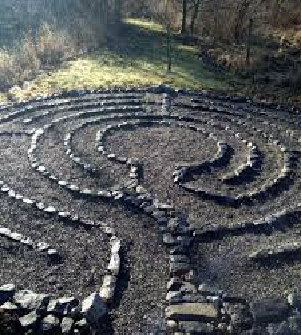
Neither the people of the earth nor their chosen modes of spiritual pursuit are monolith. Among the variety of religio-spiritual beliefs there are similarities that can be dismissed only by doctrinal adherence. Self becomes separate from Source as a result of the skewed promotion and observance of ‘self’ as imminent above all else. Two conduits for spiritual attainment, one prescribed as more viable and socially acceptable, the other more focused on internal harmony development, are available. The individual come to grips with their need, desire, longing to be united with higher source.
Samadhi is the highest state of meditation, a meditative absorption (often translated as “concentration” or “oneness”) where the meditator’s mind becomes completely still and merges with the object of focus. It is the ultimate goal in yoga, representing the 8th limb of Patanjali’s Ashtanga yoga, where the ego dissolves into pure consciousness, bringing stillness, bliss, and a direct realization of reality
Nirvana: the final beatitude (see beatitude sense 1a) that transcends suffering, karma, and samsara and is sought especially in Buddhism through the extinction of desire and individual consciousness
Moksha is the ultimate liberation from samsara, the continuous cycle of death and rebirth in Hinduism, Jainism, and Buddhism. As the final goal of life, it signifies absolute freedom, peace, and self-realization, often resulting in unity with the Divine (Brahman) or a state of eternal bliss. Key paths include knowledge (Jnana), devotion (Bhakti), and selfless action (Karma), heavily involving yogic practices to detach from desires and eliminate karmic bonds.
In Hinduism, salvation, known as moksha or mukti, is the liberation of the soul (atman) from samsara, the eternal, suffering-filled cycle of birth, death, and rebirth. It is the ultimate goal, involving the realization that the individual soul is one with the ultimate reality, Brahman. It is achieved by overcoming ignorance and karma.
Christianity: Salvation is the deliverance from the power and consequences of sin (eternal death), achieved through the sacrifice of Jesus Christ, and received as a gift of grace through faith. Key facets include forgiveness, adoption, and redemption.
Judaism: Focuses more on national redemption and living according to God’s commandments (mitzvot) in this life, rather than solely on an afterlife. It centers on conventional loyalty and repentance.
Islam: Salvation is achieved by submitting to Allah’s will, belief in one God, and performing good deeds, leading to Paradise (Jannah).
Buddhism: Known as liberation or Nirvana, this is not from sin, but from samsara (the cycle of rebirth) and suffering caused by craving and ignorance. Eastern Traditions (Hinduism/Buddhism): Focuses on moksha or nirvana—liberation from the cycle of samsara and the realization of ultimate reality. The path that leads to spiritual barrier obliteration is one that can only be tread alone.
Daoism (Taoism): The highest pursuit is the realization and embodiment of the Dao (Tao) — the formless, all-encompassing principle that underlies and gives rise to all things Dao World+1. The Dao is not a person or object but the fundamental nature of reality, and its manifestation in humans is virtue (de). By aligning oneself with the Dao, practitioners seek harmony with the natural order, effortless action (wu wei), and a life of simplicity and spontaneity
Confusianism: Confucian thought, the “highest pursuit” is most clearly expressed in The Great Learning (Da Xue), which teaches that the ultimate goal is to manifest illustrious virtue, renovate the people, and rest in the highest excellence confuciuspedia.com. This “highest excellence” (至善, zhìshàn) is not an abstract ideal but the perfected state of moral and ethical cultivation that aligns a person with the moral order of the universe (beginning with personal moral integrity and extending outward to family, state, and society).
In Kabbalah, salvation is understood as a process of spiritual correction, known as Tikkun, which removes obstacles (ego and selfishness) between the soul and Divine light. It involves attaining mystical union, repairing the world, and returning to a state of unity with God, rather than salvation from sin through a savior.
Sufism views salvation not merely as entering paradise, but as the purification of the soul and the attainment of direct knowledge (ma’rifa) of God, achieving union with the Divine in this life. It emphasizes destroying the ego (nafs) to move from spiritual ignorance to intimacy with God, often described as a journey of love.
Gnostic salvation is the liberation of the divine spark within humans from the flawed material world, achieved through gnosis—a direct, intuitive, and esoteric self-knowledge of one’s true divine nature. It is not salvation from sin, but rather escape from the ignorance of the material reality created by a lower, flawed entity (the Demiurge
Confusism:

