
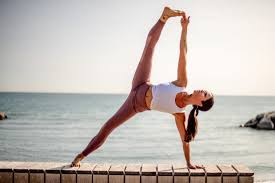
There are many ways to approach and improve physical fitness. No ‘ONE Way’ is better than any other way, generally speaking. A venue for pursuing ‘wellness’, (i.e. physical fitness) would be considered based upon what particulars it addresses or encompasses. What is practical? What is preferable? What can be accommodated? Of course, the results obtained will be a reflection of the dedication that is put forth. In that regard, whatever the venue that one uses to achieve this goal, they will have to put in the time.

There are a variety of manners through which one can improve their health, their wellness, their fitness. Improving fitness does not require the largest, the latest, the greatest. Fitness is defined as the ability to perform daily activities with vigor and without undue fatigue, encompassing both health-related and skill-related attributes that are developed through physical activity and exercise. How is this to be accomplished? Basically, stressing the body through movement is key in improving fitness. It is up to the person as to how they want to make this happen.
There (probably) is no ‘best way’ to become physically fit. The body is structured such that it can accommodate and adapt to different types of movements and stressors. Living a life where physical labour is a mainstay will keep the body conditioned. Yet, this will work up to a point as physical labour for day to day survival is repetitive. This repetitiveness can set the body into restrictive patterns of movement. The restrictive patterns can be undone, if the right attention is given to movement which addresses imbalances and physical restriction. Freedom of movement is key to maintaining fitness levels.
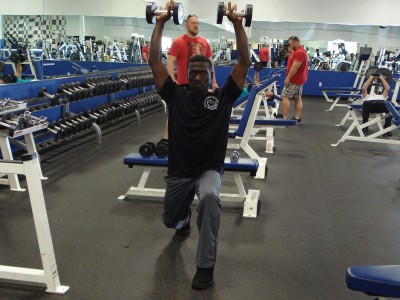
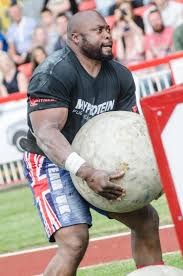
There must be a goal: fitness for the sake of fitness, fitness to get into a certain outfit, fitness to assist in recovery from some bout of illness, or fitness to prepare for some competition. Everyone that exercises has a specific modality that is their ‘go to’ when they exercise. When someone has a goal, they must devise a way to arrive at or get to that destination. A strongman competitor athlete trains for strength. A dancer must dance. Swimmer must swim. Competition, General Fitness, or just a hobby with benefits, any physical activity will bestow wellness and well-being.
Some consideration must be given to the use of a specific fitness modality. Great intentions for getting into shape, or competing on a certain level are easy to envision. There may also be some degree of modality crossover that may be affected by the various considerations. Can one choose a practical format, one that is doable and not overly challenging? Will a method be chosen that appeals to the individual’s preferences, that keeps them interested in using it consistently? Is the chosen modality one that requires hard to obtain equipment or access to certain facilities? These concerns can pose barriers to someone’s fitness and health endeavors.
Using an exercise modality cannot be a piecemeal endeavor. The exercise must be engaged in on a consistent basis. Consistency in exercise is a important factor in achieving and sustaining fitness and health goals. What is an optimal time to exercise? How much time is available for exercise? Can the regimen be segmented or does it have to all be done at the selected time? These questions can have impact upon the consistency with which the program can be engaged. Doing a couple of lengthy segments spaced between shorter ones can help with maintaining exercise consistency.
The person chooses the modality that works best for them. As every person is their own entity, their preferences will be the foundation for how they approach their (own) fitness and health. The consistency of exercising is a display of the reasons why they are choosing to exercise, in the first place. How they want to exercise will be a matter of them deciding what is most important and attractive to them. Activity is good but repetitive actions need to be balanced out, lest physical imbalances develop. What is the most effective form of exercise? . . . . . . The most effective form of exercise is ‘any form of exercise that can and will be performed with regularity’.
 Ab-Sutra Wellness and Fitness