

Blacks are over represented in the arena of ill health. Black men, specifically, are noted for the highly skewed occurrence of prostate cancer within their ranks. The following areas will be addressed to better understand this dynamic. What is prostate cancer? How do genetics influence the incidence of cancer? Do lifestyles activities lead to cancer development? Can physical activity be a mitigating factor in the development of cancer? What steps will lead to decreasing the frequency of cancer? Consideration will be given to strategies that limit prostate cancer occurrence among black men.
The prostate is a walnut-sized gland that is shaped like a doughnut. It encompasses the urethra, the tube through which urine and semen flow. Prostate cancer results in painful and difficult ejaculation and urination. Progression of the disease gives rise to the migration of cancerous cells to other parts of the body and deleterious effects on organs in the body.

Prostate cancer, the leading cancer diagnosed among men in the United States, is found at disproportionately higher levels among American black men. They exhibit the highest incidence rate of prostate cancer in the world — 180.6 per 100,000 population.[1] Prostate cancer is endemic among black men at a rate 50% above the National average. Between 1996 and 2000 in the United States, the age-adjusted death rate of prostate cancer among black men (73.0 per 100,000 population) was more than double that of non-Hispanic white men (30.2 per 100,000 population).[2,3]
Interestingly, Black men may possess genetics lending to prostate cancer development. Prostate cancer is among the few major cancers where the evidence epidemiologically reveals the involvement of genetic factors”, said Dr. Walter Willett: Harvard School of Public Health, Boston. The epidemiology suggest that there is something synchronous with diet and lifestyle.
Studies suggest a relationship between pre-birth exposure to higher levels of testosterone and the occurrence of prostate cancer. Research reveals that testosterone levels were 50% higher in Black women than in white women. Follow-up studies show that young healthy black men have 15% higher testosterone than their white counterparts. Higher testosterone percentage, at a young age, can be extrapolated out to the documented 70% to 80% higher incidence of prostate cancer in older black men.
The theory of the prostate cancer/testosterone link is that testosterone, required for prostate development, stimulates prostate growth when present in higher amounts. Data suggests racial differences within the testosterone/testosterone receptor pathway. They could be a cause of clinically observed, racial group differences in prostate cancer epidemiology. There is a strong correlation between analyzed total testosterone and prostate cancer development.
Lifestyles indicate positive associations between fat intake and prostate cancer risk between blacks, whites, and Asian- Americans. The data highlights African-American men consuming a higher percentage of calories, mostly from fat, than whites or Asian-Americans. However, insoluble fiber or roughage, a known cancer fighter, can assist in minimizing the ill effects of high fat diets.
Research shows that increased fiber intake decreases the risk of some cancers. Fiber’s protective effect, leading to decreased retention of wastes in the body, results from fiber’s tendency to add bulk to your digestive system. Diets supplemented with fiber exhibit reduced tumor development. Fiber may, in part, account for the low risk of prostate cancer in vegetarian diets. Of course, vegetarian diets are also rich in cancer-protective antioxidants.9

The development of prostate cancer can be reduced through regular physical activity. Vigorous activity may have a greater positive effect, especially on the risk of advanced prostate cancer. Also, in men with prostate cancer, physical activity is associated with better survival. Modest amounts of vigorous activity, about three hours a week, could substantially improve prostate cancer survival.
Many treatments for prostate cancer can detrimentally effect the body. Hormone therapy can lead to osteoporosis and loss of muscle mass; these conditions can be ameliorated through exercise and strength training. Other treatments, such as surgery, can cause urinary incontinence (inability to control urine flow). Kegel exercises before and after prostate cancer treatment strengthen the pelvic-floor muscles, thereby reducing incontinence.
Physical activity programs should fit your personal situation and fitness level. Consultation with a physician is recommended before starting any exercise regimen.
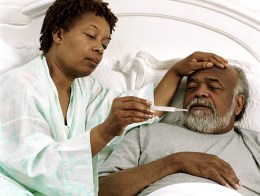
Also, considerations must be given to the ‘disconnect’ of black men from the healthcare system. The concept of stoicism, discussed by Braithwaite, could be a possible explanation of why black men do not pursue regular check-ups and are reluctant to participate in health-related activities. This concept implies that black men become “indifferent to pain/discomfort and do not seek healthcare services until absolutely necessary, most often in the emergency room.”. The outcomes of this are grave because higher mortality from advanced prostate cancer is associated with late detection. Other factors contributing to nonparticipation in screening include lack of adequate health insurance, adherence to traditional male gender roles, avoiding possible poor prognoses, and overall distrust/mistrust of the medical community.
Black men, moreso than males in other ethnic groups, become afflicted with prostate cancer. A cancerous gland causes problems ranging from urination / ejaculation issues to loss of body mass and affected internal organs. The possibility of genetic predispositions towards this disease is currently being studied. Research has revealed a strong correlation between higher amounts of testosterone, possessed by young black men, and the occurrence of prostate cancer later in life. Higher fat diets, consumed by black men, have been indicated in the development of cancer. Cancer occurrence could be abated by adopting healthier dietary habits. Many treatments for cancer, can physically debilitate the individual. These are initiated after the cancer has reached later stages, due, predominantly, to the avoidance of the health care system by African American men. Beginning an exercise regimen can help reduce the incidence of death from such treatments.
In short, there is a high degree of prostate cancer among African American males. Genetics, hormonal distributions, improper diet, inadequate exercise and infrequent check-ups are all implicated in developing prostate cancer. Adjustments to diet, exercise, and obtaining regular checkups could significantly contribute to lessening the impact of this disease amongst black men.
 Ab-Sutra Wellness and Fitness