

In the book ‘The Modern Art and Science of Mobility’, an approachable format is presented for maintaining functional movement capability. This series of blogs will give an outline of the book. There are combinations of movements and therapies contained in the book that will not be presented within this series of outlines.
Movement is integral to life. To express existence in this reality is to move. There are bodily structures that provide a facilitatory framework for the proliferation of movement. These structures fall under the category of muscular chains. Muscular chains are of three types: synergists, muscle slings, and myofascial chains. Each of them serves a specific function. Yet, they are not necessarily separate. The actions performed by these structures is largely dependent upon the interplay of the designed interconnectivity. They work together as a holistic functional unit.

Movement is life . . . . . There is nothing on this planet that does not move. The mere state of existence is predicated on movement. Mountains present an ambiance of stoicism. Yet plate tectonics (sea floor spreading, subduction, plate collision) contribute to the movement and growth of mountains. Plants wave in the breeze. Without movement caused by the wind, plant stem resiliency could never properly develop. The body, as an organism on this earth plane, is subject to the dynamics, laws, and forces to which impact the entirety of the earth.
There are bodily structures that aid in movement. These structures support multiplanar, multi-joint actions and activities. The body, as a whole, moves dynamically through space. The various combinations of muscular action, body placement and stabilization require that these structures are supportive of the body overall.
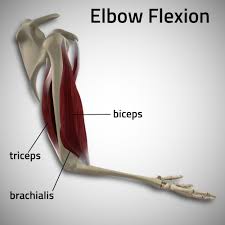
Synergist – these muscles work in tandem, as stabilizers, with agonist / antagonist muscle pairs. They are stabilizers which control rotation and torso balance, and stabilization agonist / antagonist generated actions. In an action, the principal muscle involved is called the prime mover, or agonist. The opposite muscle, the antagonist, must remain relaxed. During forearm flexion, for example, lifting a cup, a muscle called the biceps brachii is the prime mover. Because the brachialis assists the biceps brachii in the flexion movement, the brachialis is called a synergist in this action (Figure 11.1.1). A synergist can also be a fixator that stabilizes the muscle’s origin.

Slings – Muscles slings are the connection between muscles and when the muscles then activate together they can enhance the stability of your body. the myofascial network is a connected structural continuity anis distributed throughout the entire body. Slings are spans of tissue you can rest in. They make movement easier by decreasing the amount of tension needed to complete the act. Slings exist to remove slack from the system. They cross and connect joints synergistically instead of getting caught up on them. When utilizing that rotational settling in, for example, the weight and position of the arms can effect the pelvis to rib opening, shoulder socket external rotation, and tension lines pulling away from the true meridian.
Myofascia – fibreoelastic membranes that cover or envelop a joint and attaches skin to muscle. Fascia ensure that muscular force and external sources of resistance are properly balanced. Fascia is the biological fabric that holds us together, the connective tissue network. You are about 70 trillion cells — neurons, muscle cells, epithelia — all humming in relative harmony; fascia is the 3D spider web of fibrous, gluey, and wet proteins binding them together in their proper placement.
How these structures interact – Muscle slings are responsible for movement, per se. The synergists serve as movement support and body stabilization structures. The fascia holds everything in the body together. The body will do as much as the combined interplay of these structures can support. Stronger muscles can help with bodily capability. Yet, muscle imbalances can and do develop. Injury can also impact overall quality of movement. It behooves the average person to incorporate strategies that will bring the continuity of these structures into balance.
The body is an instrument that requires care and maintenance. The basis of bodily maintenance centers on movement. Dysfunction results within the body in the absence of movement. Young children move effortlessly, freely. Socialization weathers away at this natural ability with the passage of time. Injuries are sustained and musculoskeletal imbalances develop. These situation contribute to the bodily dysfunction. There are movement and exercise sequences prescribed in the book that can help one to restore balance throughout the body. The functionality of the body can be restored.
 Ab-Sutra Wellness and Fitness