
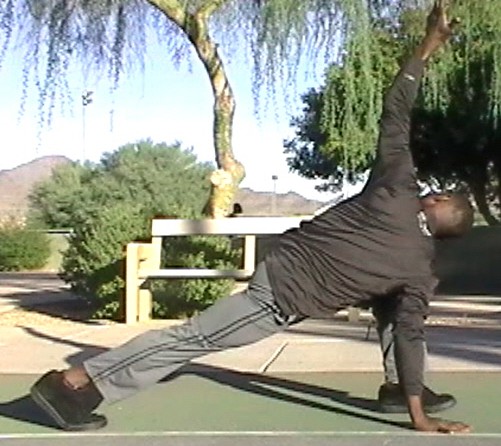
Spinal Rotation is a crucial element of spinal movement. It is how the body facilitates ‘crossing over’ to opposite hemispheres. This movement is closely linked to lateral flexion. The spinal structures associated with this movement will stiffen with the passage of time and without consistent usage. It is important for stimulating metabolic and physiological functions. Increasing rotational capacity can lead to overextending the movement and causing injury. The spine is maximally benefited by correctly training this movement.
The body moves through space in accordance to the the axes and the planes. The planes are as follow: Sagittal Plane for Forward and backward movements, Coronal (or Frontal Plane) for Side-to-side movements and, transverse Plane for Twisting movements. The axes are follows: Anterior-posterior Axis for moving limbs sideways from mid-line, Transverse Axis for moving limbs front to back and, Longitudinal Axis for rotating limbs around the midline. Of particular interest are the transverse plane / longitudinal axes as these address rotation.

Rotation allows the left hand or foot to reach across the front or back over to the right side. There is some hip movement required for this to occur. Rotation is not the capacity to maximally engaged the action. It is to assist in synchronized movement which is generative of subsequent movement. The act of walking (or running) perpetuates itself once it starts. The physiological arrangement stores the energy and releases it through patterns of rotation. A swinging forward left arm and a stepping forward right leg are counter balanced by the back swinging right arm and pushing off left foot. All of this action is related to and dependent upon spinal rotation.
The muscular action that is responsible for spinal rotation recruits some of the same muscles used in lateral flexion. Due to the geometrical properties of the articular facets of vertebrae, in many parts of the spine, the (axial) rotation is inevitably associated with lateral bending and vice versa (coupled motions). The flexion and extension may, of course, combine with the lateral bending or axial rotation and affect the degree of coupling (Vicenzino 1993,Edmondston 2007). To rotate may involve some lateral activity. These actions do occur hand and hand much of the time.
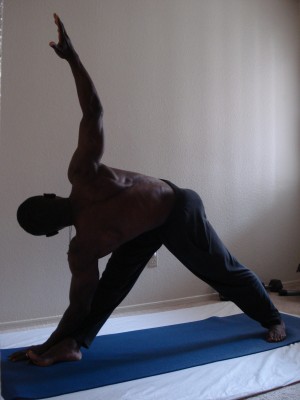
The structure of the spine can become compromised by the inactivity with the passage of time. Spinal rotation is a movement that is inadequately engaged due to the dearth of physical demand in society today. Studies show reduced thoracic mobility in individuals who spend >7 hours/day sitting and <150 min/week of physical activity. Further research could possibly reveal causal relationships between activity behaviours and spinal musculoskeletal health. The body requires movement for the maintenance of spinal rotation
Spinal rotation is linked to the congruous functioning of the internal organs. Twisting helps digestion by moving stool through the colon’s, four main parts: the ascending colon, transverse colon, descending colon, and sigmoid colon. While twisting is not going to “cleanse” the colon, it can help with digestive discomfort or constipation. It also promotes improved liver and kidney function through removal of toxins, support of immune system health, and reduction of stress and tension. This can be extrapolated to the benefit of walking . . . . a gentle modality for engaging spinal rotation.
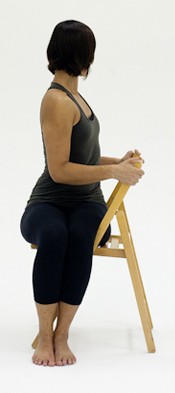
The ability to activate spinal rotation can become problematic due to overextending actual ROM for the individual. This excessive twisting can result in injury to one or more of the facet joints. Excessive rotation (twisting) or extension (arching) motions of the spinal structures (facet joints), which can wear down the cartilage and can place pressure on nerves as they exit the spinal cord. Subsequent pain and irritation could potentially be indicative of lumbar facet syndrome. This is often caused by
The capacity to enact this movement with regularity mandates that it be trained in an efficient and effective manner. A certain level of fitness is needed before one begins to improve their rotational movement. The stress on the spinal structures must be increased ‘gradually’. Maintaining good alignment is important when rotating the spine. Properly aligning the spine will allow the spinal structures to more effectively support the enacting of the rotational movement.
 Ab-Sutra Wellness and Fitness