

Greed – Excessive desire for getting or having; esp. wealth; desire for more than one needs or deserves; avarice, cupidity.
- A: The prefix that negates the word, meaning “non”
- Graha: Means “to take,” “to seize,” or “to grab”
- Pari: Means “on all sides
Greed is ever prevalent in today’s society? Society promotes greed in myriad ways: “bigger is better”, “get something new”, you can get this on credit-with no payments until . . . ,“another credit card” . . . Greed – Lazarus was shunned by the “rich man”. Greed – as evidenced by one person owning 3 cars, by individuals owning/coveting lots of shoes/clothes, households with a TV in (nearly) every room, . . . Where does it end?? When will it End? I mean, really! In moderation, these things in and of themselves are not so bad. The tendency towards “incessant acquisition” is an evidenced, unconscious need to acquire. Yet, it is not so much unconscious as much as this need is ‘subconsciously stimulated’. Connecting with our inner self dissolves the illusory veil. Our temporality is an unrecognized quality. We exist in a vacuum that clouds the essential nature of heartbeat and breath. Greed separates the individual from what is actually essential. Establishing inner balance is key to knowing what constitutes actual necessity. To develop purity of Self requires recognizing the limitations of the ego-self

Greed is an aberration of the basic human survival instinct. There is the basic human need for food, clothing and shelter. The basic level of actual human need, the amount of consumption and acquisition that is necessary to sustain human life and activity, really is not that much. Some, however, do not halt after the survival level of acquisition has been met. Thus, there is an attitude of ‘get it while you can’ that leads our society headlong down the path of “incessant acquisition”. It is also a western tendency to, as much as possible, consume what is available. Rarely is the exhaustion of natural resources contemplated by the everyday individual. Thus, greed, cupidity and avarice hold sway; we actually choose to be selfish.
What is the impetus that fuels the urge to acquire things? The consumption of goods, the hoarding of resources, the belief that there is not enough to sustain the world (population) can be attributed to a spiritual void that exists within many people. This spiritual void is the result of looking for something to fulfill us from without instead of from within. To go within, to really be comfortable within one’s self, during waking hours and sleeping hours, requires that the temporary satisfaction derived from material objects undergo an in-depth review. It is a high that must be repetitively renewed, repeatedly boosted. This need to keep the feeling of newness, the sensation of freshness, the rush of possessing something for the first time gives charge to the urge for acquisition. It can, and does, become a means unto itself.

Greed runs rampant as an all consuming tendency. This tendency to want, to acquire, to have, to possess negates awareness of the essentials for existence. The essentials for existence cannot be bought, be sold, nor be possessed. The query then arises: “why do the trappings of greed seem so appealing to the masses of people? When the efforts of acquisition are expended on the external environment and surroundings, then those efforts do not leave room for internal reflection. It is internal reflection that enables us to contact that aspect(s) of ourselves which do not discriminate, judge, nor covet any of the trappings of the material world. It is within this aspects of ourselves that the essence of GOD dwells. It is as simple as the breath (And GOD breathed . . . the Breath of Life into his nostrils and man became a living soul Gen 2:7 KJV).
By connecting with our non-judgmental, non discriminatory and non covetous aspects, we discover the Pure and Selfless Self. Because greed is so much a part of our run-about, run-amok society, it is easy to lean in the direction of acquisition, constant wanting, and constant craving. When a society is built around providing endless choices, constant amusement and instant gratification, the inability to see past the illusion of instantaneous satisfaction is bolstered. What is real becomes blurred by what is fanciful.
That truth that we are temporal beings on this earth plane is obscured. We, as humans, are allotted so many heart beats, so many breaths. Why is it that we rush around and about so much as to barely notice the passing of (just) one heartbeat or even one breath? Instead of reveling in these aspects of living (in the earth plane) that sustain us, that connect us to the universal energy, the fabric that binds the cosmos together, we ignore them. We rush them. We do not allow them to (really) be part of our lives nor do we ever connect to them.
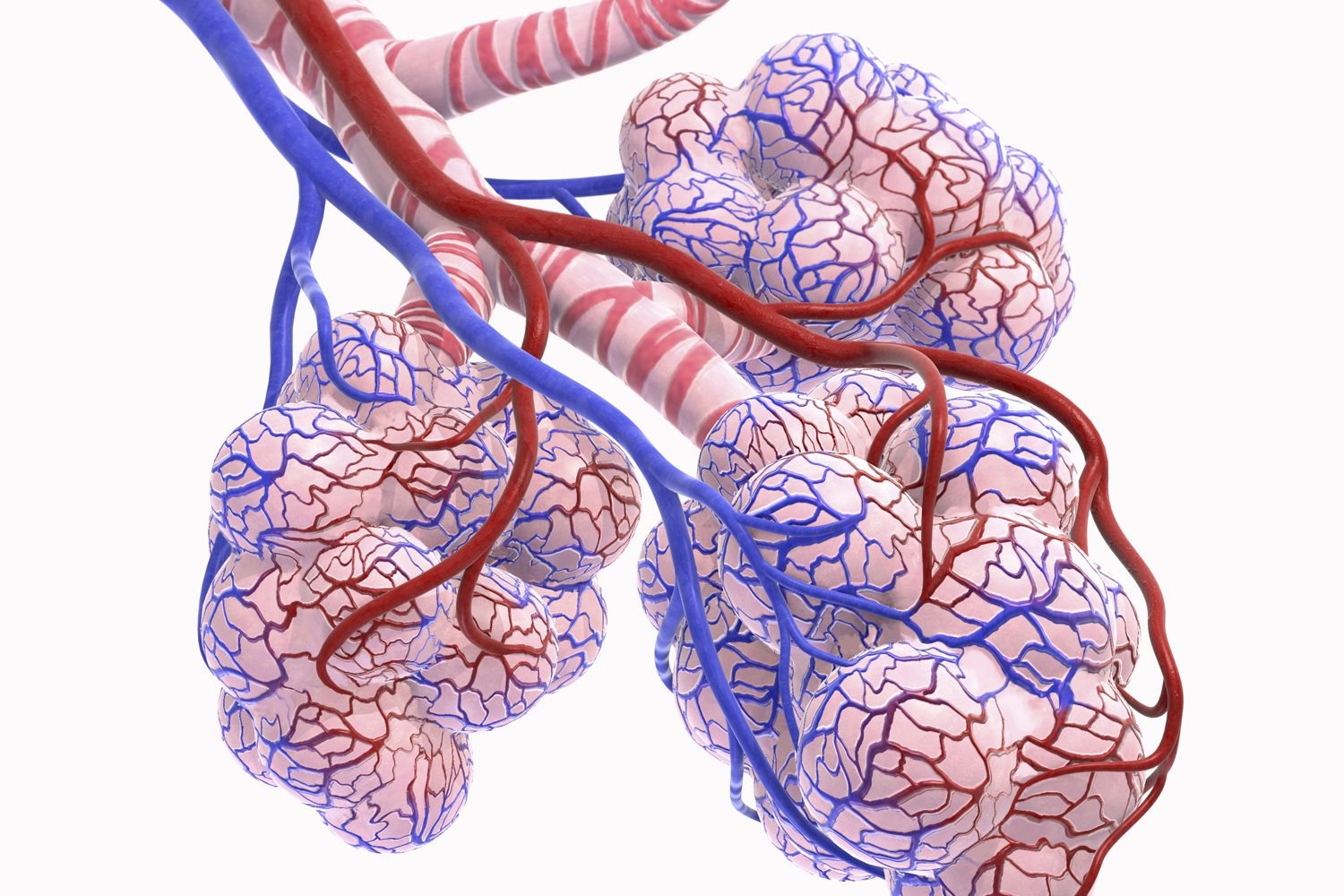
The alveoli are crucial structures for the process of breathing. They are necessary for exchange of CO2 for Oxygen
Most activities that we undertake draw our attention away from the breath, from the heartbeat: two essential physical qualities that allow for existing on this earth plane. Many people are cognitively and physically disconnected from the ability to breathe fully or to feel their own heart beat. However, we can go replace last year’s cell phone model with the latest model (and proceed to talk on it) all day. When the acquisition of things and the attraction to diversions possess an individual, then life is viewed within the context of what can I get, how much of it can I get, how many times can I get it? There can only be an end to (the) greed when one realizes the truly essential aspects of existence have to be appreciated in their purity and developed to their fullest.
Can we learn to appreciate and develop these essentials and to disconnect (at least a little bit) from this greed? We can do this by allowing time to disassociate from the day to day grind in order to experience and insperience (bringing the Inner Self into unison with beneficial life occurrences) the nature of our essential existence. This can be done by doing something as simple as taking a walk. Walking fast need not be the goal. Instead, walk in such a way that gives precedence to the quality of each step, the fullness of each breath and the completeness of each heartbeat. Walking for insperience and experience disconnects us from grasping, achieving and acquiring. We let go of the need to achieve goals and to just be part of the process, without planning or dictating the outcome. A more balanced sense of being is easily attained when acquiring is not part of the equation. No grasping, just accepting – no forcing, just yielding – no reaching, just flowing. This facilitates addressing the tendency toward greed at (on) the inner level, recognizing it, and working towards alleviating the effect it exerts over our lives. We take a steps toward the reconciliation of outer influences upon our inner selves.
When we are (more) balanced, we (begin to) see that more is not, by necessity, better. We can be (more) at ease with (what is) enough. We don’t compare others to ourselves (based) on we do or do not have or what they do or do not have). An effect of greed is that every thing one is based on possessing. Our time is consumed by wanting and working to get things. Since wanting is an experiential phenomena, we take the attention from our inner selves us and attach more and more to the temporal, external surroundings. Always reaching, always grasping, always wanting and, yet never acquiring quite enough; there is always more to acquire, more to get, more to have. We live in a society where the idea of doing more with less is viewed as heretical. We are socialized to believe that it is not right to do more with less. We can do more with more and we gravitate towards that end. Learning to do more with less minimizes that urge to constantly acquire items, to possess things.
Giving focus to pure awareness allows no ground for self-conscientiousness or (asmita) ego to take hold. This is because pure awareness brings one into contact with GOD, the Source of All of Creating / Sustaining / Dissolving. The individual realizes that All is One and One is All. The things that we do amiss, resonate throughout all of society, all of humankind, all of earth. Everything on this planet is completely intertwined and, unfortunately, the (seemingly independent) actions that we undertake do not occur in a vacuum. The entire earth is a victim as long as greed reverberates throughout society, throughout the earth. Recovery, from overt consumption does not get resolved, cannot be redressed, overnight. However, as people begin to address the desire to posses, acquire, and endlessly consume, there will be a step by step relinquishing of greed’s hold on the modern socialized mindset. Only then can humankind begin to traverse the path of being stewards of the earth and truly fulfill the role of being their brother’s keeper.
 Ab-Sutra Wellness and Fitness