
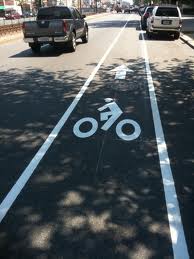
Bicycling in the city is not for the faint of heart. Bicyclists face perils on a continual basis. Street riding is a must for quickly arriving at a destination. Having proper bicycle lighting ‘usually’ makes for better visibility. Traffic laws, per se, are meant to augment and ensure overall safety on the road. Some motorists gloss over their responsibility to be attentive and tuned in to the road. Also, a dismissive attitude toward bicycles on the road is harbored by (some) motorists. Basically, calculated risks will be part of city bicycling.

Motorists rule the road in the city. The roads are full of automobiles during the ‘daylight/daytime’ hours. Weaving into traffic. Weaving out of traffic. Cutting off other drivers. Zooming to the red light. These are some of habits with which other drivers must contend. The vehicle itself is an isolated juggernaut. It is a barrier in that it somewhat protects the driver from outside forces. The bicyclist has no such protection. The bicyclist is totally exposed and subject to the forces by which they are surrounded. The most extreme care must be exercised by the bicyclist due to their having no control over, no protection from the whims of other motorists. people any given day
All perils being placed to the side, riding in the street is the quickest way to arrive at one’s destination. Riding the road must sometimes devolve into riding on the sidewalk to remain safe. streets are often lain down with ‘minimal’ consideration of bicycle traffic. As such, the cyclist must sometimes choose between the street or the sidewalk. There is adequate space in the gutter part of the road in many cases. Yet, to ride in this space during (heavy) traffic can be daunting. One can traverse the distance very quickly via the direct access provide by (the) roads. To do this is to assume a most diligent and observant demeanor while on the road.
Being seen while on the road is a big plus. Most motorists are like ‘in a coma’ while driving. Most driving tasks are so rote that insignificantly new or different things on the road sometime go unnoticed. Using lighting when bicycling, even in broad daylight can help. The brighter the light the greater distance you will be seen from and this pertains to having a noticeably bright light for daylight riding. Noticeable lighting is not a panacea for overall protection. Indeed, a cyclist is always at the mercy of motorists with whom they share the road. A published study from Denmark in 2013 found that the accident rate for cyclists utilizing permanently affixed and illuminated lights was 19% lower than those cyclists without lights . . . . there you have it.
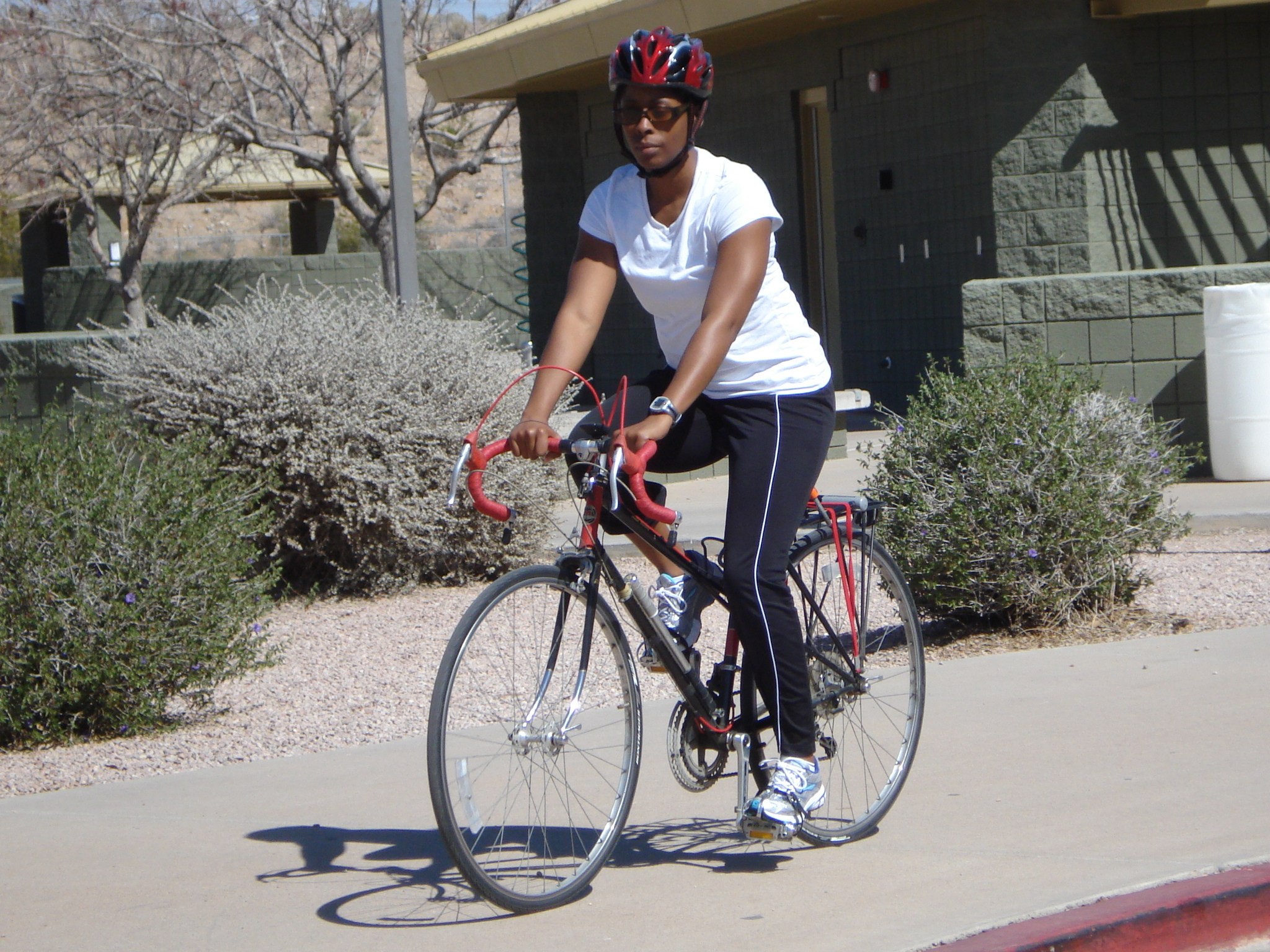
There are traffic laws in place to maintain order on the road. Traffic laws are fairly explicit in defining right of way. They Traffic exist to protect drivers, pedestrians, and other users or passengers using public roads. Traffic laws elucidate the rules of the road and regulate behavior when driving. Yet, a bicyclist must be situationally aware even when a they adhere to the rules of the road. Motorists have the upper hand, weight and speed wise against a bicyclist. Thus, the cyclist must ALWAYS be one or two steps ahead of the motorist when on the road. It is not worth it to push legal correctness when having a larger, faster moving vehicle with which to contend.
Many drivers are on auto-pilot; this is sub-standard, inadequate conduct for any amount of time on the road. Drivers who received their licensed from 2017 to 2022 were significantly more likely to record videos, watch videos, and use smartphone apps while driving compared to drivers who had been licensed more than 10 years. A National Safety Council study revealed that motor vehicle deaths reached an estimated 46,000 in 2022, with at least eight people a day killed in distracted driving crashes. Inattentive driving is a primary factor in a high number of automotive accidents. Fully attentive drivers typically do not rear-end the vehicle in front of them, drive through a stop sign or drift into another lane of traffic.

Motorists, by far, represent the greatest danger to bicyclists, particularly where traffic speeds are high (Siman-9 Tov et al., 2012). Bicyclists involved in vehicular collisions are over three times as likely to suffer a serious injury (Rivara et al., 1997). Motorists are not fully cognizant of occurrences in their immediate environment. Subconscious involvement of attitudes and biases affect the unconscious aspects of driving, per se. Human interaction automatically invokes “socio-cognitive processing”. Research shows that interacting with bicyclists puts ‘additional cognitive demands’ on(to) drivers. This can negatively impact the perceptual and motor skills involved in operating a vehicle (Walker, 2005).
The bicyclists must be fully aware of their surroundings. The roads are constructed for ease of passage for ALL traffic. Yet as a bicyclist, it is imperative that one ‘be seen’. The bicyclist ids subject to the same traffic laws by which motorists must abide. However, motorists have a tendency to forgo their responsibility to be focused at all times. Motorists tend to dismiss that necessity of sharing the road with bicyclists. Thus, the onus is upon the bicyclist to continually assess, monitor, and adjust when on the road.
 Ab-Sutra Wellness and Fitness