
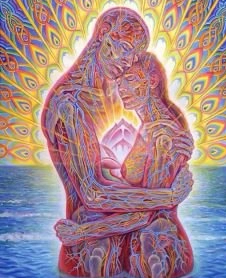
Hallucinogens (Psychedelics, substances) have always existed amongst inhabitants of the earth. Psychedelics can serve to expand / heighten consciousness within secular or religious settings. They are accepted due to the inherent benefits derived from major alterations in thought, mood and perception. Yet these same, and synthetically similar, substances are shunned and vilified by certain groups. Political and economic ends have been facilitated by attaching disparaging and divisive qualities to these substances. Recent studies are substantiating the usefulness of these substances. Research is validating that psychological application of these substances can provide alternatives for healing.
The theory of proto-hominid psychedelic use is supported and promoted within the scientific community. The current understanding of early hominins’ paleodiet and paleoecology, primate phylogeny of mycophagical and self-medicative behaviors, and the biogeography of psilocybin-containing fungi lends greatly to this theory. Terrence McKenna purports that a hunter-gatherer existence, coupled with the trailing of ungulate herds for food, and the sampling of resultant fungal growth might be a sequence of events that facilitated the induction and acceptance of psychedelics into the hominid dietary melange.
The spirito-religious enclaves have developed ceremonial usage of psychedelics. Earliest predates the majority of written history. Explorations give evidence to early use of psychedelics. Early humans evolved ceremonies around their intake. Scholars believe that the altered perceptions experienced by individuals ingesting those substances were so extraordinary. It is surmised that the experiences were taken to have been inspired by the gods they worshiped. The import of psychedelic use in ancient times is documented in the cases such as the Eleusinian Mysteries

The molecular constitution of psychedelics induces an alteration of ‘perceived normality’ within the human physiology. Hallucinogenic and spiritual awakening effects are experienced from use of ‘classical psychedelics’. Psilocybin (4-phosphoryloxy-N,Ndimethyltryptamine), MDMA (3,4-methylenedioxymethamphetamine), lysergic acid diethylamide (LSD), peyote (mescaline) and dimethyltryptamine (DMT) are some of the most common “classic hallucinogens.” There is another group of psychedelics called dissociative drugs, i.e.: PCP, Ketamine, DXM. They make a person feel as if they are detached from their body or surroundings. Profound revelations can result from the induced changes in a person’s sensory perception, emotions and thoughts.
Modern society has in recent times conceived of the dysfunctionality in using psychedelics. Psychedelic use is described as offensive and inconsistent with the doctrines of organized religion. The government has also classed these substances as being the highest grade of illegal substances. The recreational use of psychedelics, which arose, in part, from government experimentation on the general populous, was presented as a blight on society. Many in society went along with the propaganda and bought in to the scare.
A key to attaching a label ‘illegal’, ‘harmful’ or non-beneficial to these substances is that certain agendas could more easily be presented and instituted. The height of the Viet Nam conflict and the growing domestic unrest that ensued were situations that coincided with the use of psychedelics amongst the younger generation. The presenting of psychedelic using youth as individuals who would undermine ‘American Ideals’ was useful in carrying out wholescale criminalization of these substances. Many religious folk went along lockstep went the government mandates and were kept in step with admonishments of damnations.
Scientific testing is verifying that psychedelics are not at all detrimental to individuals or society. Studies done on psilocybin demonstrate safety and tolerability in both the short term and long term with over 220 psilocybin administrations. There were no persisting perception disorders, prolonged psychosis, or other long-term impairments of functioning that were indicated The conclusion was “that psilocybin administration to healthy, high functioning, and well-prepared subjects in a responsible clinical or research setting is generally well tolerated and that future studies using this important research tool are justified (Studerus et al. 2010, p. 16).

These substances can be utilized to allay various types of mental perturbation. Psilocybin and LSD appear to tame self-reflection and all but ruin rumination, that obsessive mental state characterized by excessive, repetitive thoughts. “MDMA can reduce PTSD driven fear response and decrease defensiveness without blocking access to memories or preventing experience of emotion. There are other psychedelics that have been studied and shown promise for application in clinical mental stabilization.
These substances have a long ranging history that coincides with the development of humankind. Perhaps by accident, the ingesting of hallucinogens is part and parcel of the rise and impact of humankind on this earthscape. They do facilitate the enhancement of certain biophysical attributes. Heightened awareness is facilitated by these naturally occurring substances. They can provide an edge in mental stabilization: thus, leading to more constructive social interaction. What is really, strangely apropos is that theses substances are only recently being accepted and researched for the positive medical applications; the long ranging history of using them notwithstanding.
 Ab-Sutra Wellness and Fitness